Supporting Sustainable Coexistence: Advocating for a Balanced 4(d) Rule in Wolverine Conservation
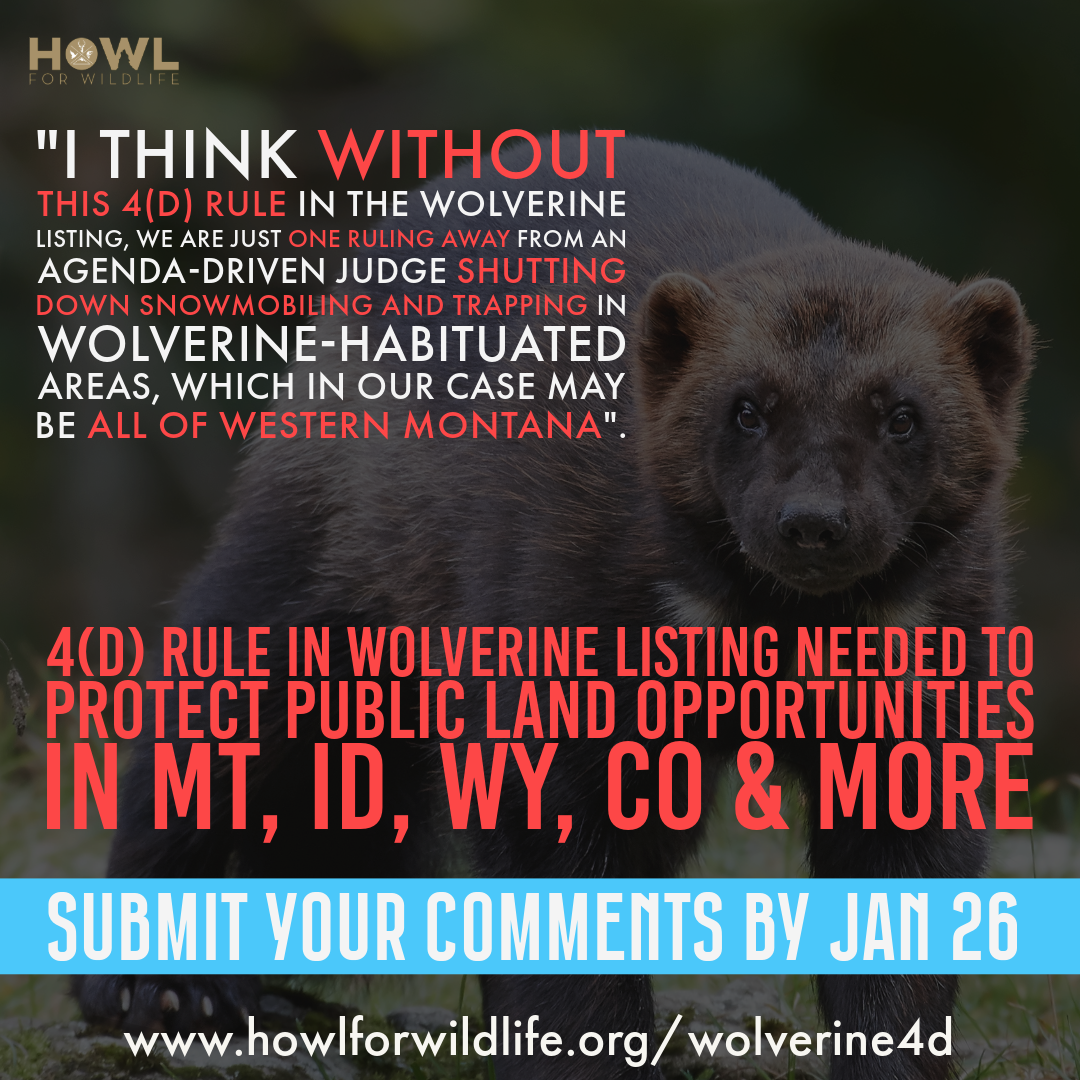
"I think without this 4(d) rule in the Wolverine listing, we are just one ruling away from an agenda-driven judge shutting down snowmobiling and trapping in Wolverine-habituated areas, which in our case may be all of western Montana." Jeff Darrah, Executive Director, MTSFW
The recent listing of the wolverine under the Endangered Species Act (ESA) after 22 years of debate marks a significant shift in wildlife management and conservation policies. This listing, while important for the species' protection, has raised concerns about its impact on traditional activities such as trapping, land management, and recreational pursuits like snowmobiling, which is essential for both recreation and as a mode of winter transportation for trappers and running dogs for hunting or otherwise.
The wolverine's listing echoes challenges seen with other ESA-listed species like the grizzly bear, where regulations have significantly hampered recovery efforts and land management activities. For instance, a recent ruling in Missoula to shorten the wolf trapping season due to the risk of trapping non-hibernating grizzly bears highlights the far-reaching implications of the ESA's "TAKE" clause.
A critical aspect of this debate is the interim 4(d) rule, which is open for public comment until January 29, 2024. The 4(d) rule offers a balanced approach, allowing certain activities like scientific research, forestry for wildfire reduction, and trapping, with provisions that these do not hinder the species' recovery. This rule is crucial for maintaining traditional activities without incurring legal penalties, especially in states like Montana, Idaho, and Wyoming, where wolverines are prevalent.
Why does this also concern Colorado residents? There is a bill coming in 2024 to re-introduce Wolverines to Colorado. A quick phone call rendered the same potential consequences as the states above: negative consequences to skiing, snowmobiling, trapping, predator hunting, hunting - pursuing with dogs, logging, etc. Note: The idea of the reintroduction of wolverines was not met with resistance, with one caveat: the 4(d) rule has to be in place.
Currently, there is no evidence to suggest that these legal activities negatively affect the wolverine population. However, without the 4(d) rule, activities like trapping could be entirely banned year-round, as wolverines do not hibernate, posing continuous risks of incidental trapping.
The ESA, while fundamentally important for protecting endangered species, has often been a tool for litigation, impacting land management and hindering the delisting of recovered species. In light of the ESA's 50th anniversary and its complex legacy, there is a growing call to modernize the Act and amend related laws like the Equal Access to Justice Act (EAJA) to prevent misuse.
The necessity of supporting the interim 4(d) rule is clear. Upholding it would allow land management agencies to continue vital activities, including controlled burns and winter recreational activities, without the fear of legal repercussions. It is a step towards a more balanced approach to species conservation and human activities.
Therefore, it is crucial to engage in this process by submitting comments in support of the 4(d) rule. This action is not just about modernizing the ESA but about ensuring that conservation efforts align with the practical realities of land management and traditional activities. Public participation in this comment period is essential to shaping a policy that effectively balances species protection with the needs and rights of those who live and work in these areas.
See the Fur Takers Of America Written Comment Here
CLICK HERE TO SUBMIT COMMENTS IN SUPPORT OF THE 4(D) RULE
You can comment with just a simple "I support the 4(D) rule," write your own message, or consider some of these points below. Either way, it's important to make your support of the 4(D) rule clear.
-
Need for Balanced Conservation: Emphasize the importance of balancing wolverine conservation with the needs of local communities, including trappers and recreational users. Support the 4(d) rule.
-
Impact on Traditional Activities: Highlight how a strict application of the ESA could adversely affect traditional activities like trapping and winter sports, which are vital for the cultural and economic wellbeing of the communities. Support the 4(d) rule.
-
Importance of the 4(d) Rule: Stress that the 4(d) rule is crucial in allowing certain activities that are not detrimental to the wolverine's recovery and how this flexibility is vital for practical conservation efforts. Support the 4(d) rule.
-
Scientific Basis for Regulations: Urge for decisions to be based on solid scientific evidence, particularly regarding the impact of regulated activities on the wolverine population. Support the 4(d) rule.
-
Clarity on 'Take' Provisions: Request clear guidelines on what constitutes a 'take' under the ESA, to ensure that individuals engaging in lawful activities are not unfairly penalized. Support the 4(d) rule.
-
Support for Land Management: Discuss the necessity of the 4(d) rule for effective land management practices, including controlled burns and habitat maintenance, which can actually benefit the wolverine's habitat. Support the 4(d) rule.
-
Economic Considerations: Point out the potential economic impacts on local communities if traditional activities are overly restricted, including loss of income and employment. Support the 4(d) rule.
-
Support for Sustainable Practices: Advocate for provisions that encourage sustainable and environmentally responsible practices in activities like forestry and trapping. Support the 4(d) rule.
-
Recreational Importance: Highlight the significance of winter recreational activities, such as snowmobiling, both for local culture and as a transportation mode in winter. Support the 4(d) rule.
-
Legal Clarity and Fairness: Address the need for legal clarity to ensure that individuals and groups are not unjustly penalized for incidental interactions with wolverines. Support the 4(d) rule.
-
Historical Context: Provide a historical perspective on the relationship between humans and wolverines in the region, emphasizing coexistence and mutual adaptation. Support the 4(d) rule.
-
Community Involvement: Stress the importance of involving local communities in decision-making processes, as they are most affected by the regulations and often have valuable practical insights. Support the 4(d) rule.
-
Precedents from Other Species: Reference the management of other species under the ESA, like the grizzly bear, to illustrate the potential negative impacts of stringent regulations. Support the 4(d) rule.
-
Educational and Awareness Programs: Suggest the implementation of educational programs to increase public awareness about wolverines and responsible practices to coexist with them. Support the 4(d) rule.
-
Review and Adjustment Mechanism: Recommend that there be a mechanism for regular review and adjustment of the 4(d) rule based on ongoing scientific research and field data to ensure that it remains relevant and effective. Support the 4(d) rule.
- The 4(d) rule is crucial: It is crucial to continue the inclusion of the 4(d) rule as part of the wolverine listing to uphold certain activities since the 4(d) rule is largely predicated on and recognizes the value of human interests, including maintaining our customs and cultural historical uses of public and private lands. Support the 4(d) rule.
CLICK HERE TO SUBMIT COMMENTS IN SUPPORT OF THE 4(D) RULE
The information on this site is not, nor is it intended to be, used for the carrying on of propaganda, or otherwise attempting to influence legislation except as is permitted under Internal Revenue Code Sections 501(c)(3) and 501(h). The information contained in these emails or call scripts are intended to be entirely educational in order to inform members of the government of various issues related to hunting, fishing, conservation, etc. The information contained in these emails or call scripts are not being sent by or on behalf of Howl for Wildlife or any of its directors, officers, agents, affiliates, or anyone else connected with Howl for Wildlife. Moreover, the user has the right and ability to alter this email or call script to fit their requirements, views, opinions, etc.