Support H.R. 845 – Pet and Livestock Protection Act
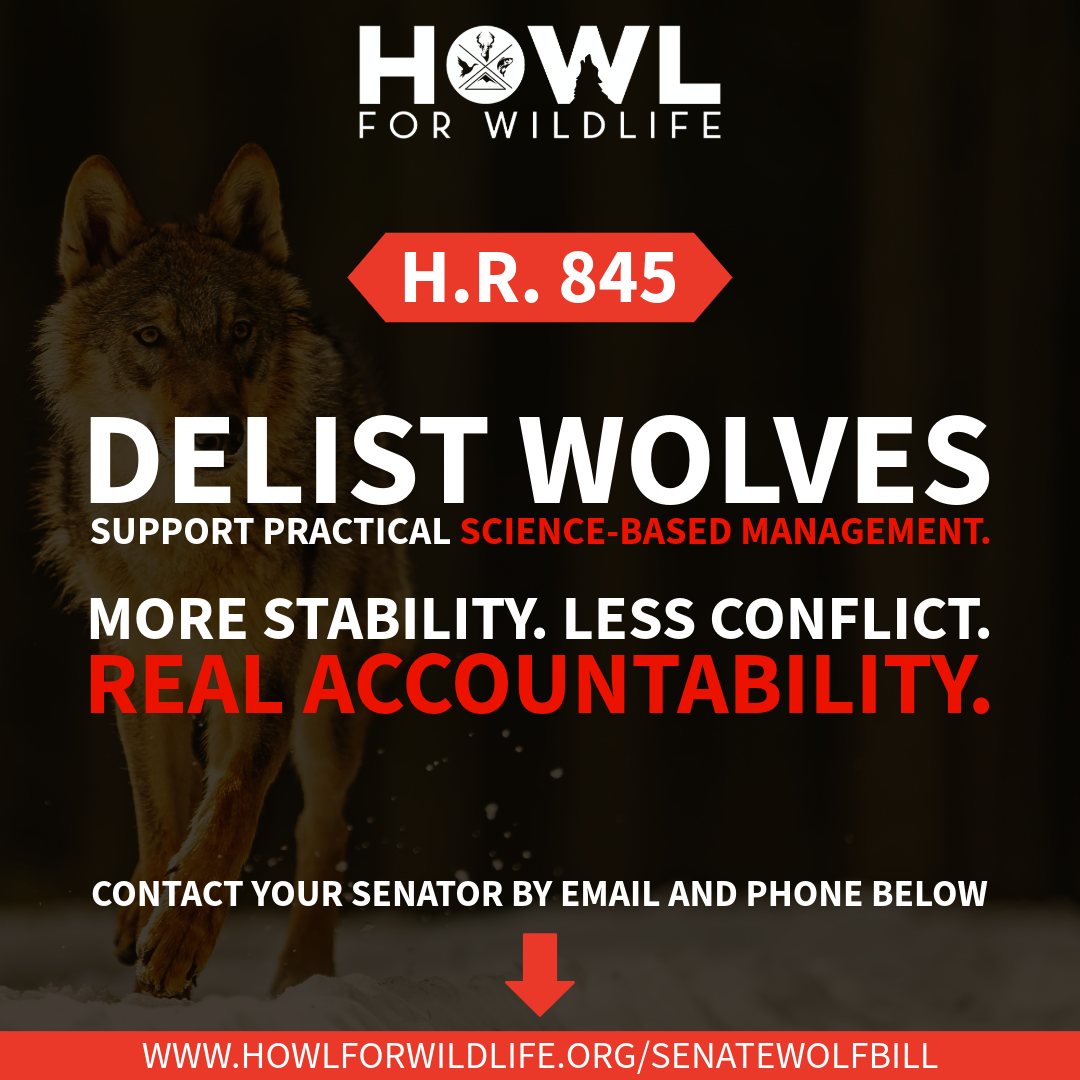
The U.S. House just passed the Pet and Livestock Protection Act (H.R. 845) on December 18, 2025 by a 211–204 vote. Congress.gov
Now it’s in the U.S. Senate—referred to the Senate Environment & Public Works Committee—where it will face a tougher fight.
What this bill does (plain English)
H.R. 845 requires the Department of the Interior to reissue the 2020 gray wolf delisting rule for the Lower 48 (except the Mexican wolf)—and it prevents that reissued rule from being overturned through judicial review again.
That 2020 rule was vacated by a federal court in 2022, which is why wolves “snapped back” under prior federal protections.
Why this matters (for hunters, ranchers, and the non-hunting public)
This isn’t about “getting rid of wolves.” It’s about putting wolf management where it actually functions best:
-
State wildlife agencies manage wildlife for real-world conditions—with seasons, quotas, monitoring, and accountability to local communities.
-
Coexistence works when there are boundaries. Rural families should be able to protect pets and livestock and reduce conflicts before they escalate.
-
Endless courtroom ping-pong is not wildlife management. Wolves shouldn’t be managed by whichever judge draws the case next.
If wolves are recovered in a region, the question shouldn’t be “How long can we keep them federally listed?”
It should be “How do we manage them responsibly—like every other recovered, successful species?”
FAQ:
“Does this mean wolves will be wiped out?”
No. Delisting doesn’t remove management—it changes who manages. States still set rules, seasons (if any), monitoring, and enforcement.
“Why not keep it federally protected?”
Because “protected” isn’t the same as “managed.” Where wolves are recovered, we need conflict-reduction + accountability, not courtroom-driven instability.
TAKE ACTION: Contact Your U.S. Senator today—CALL OR EMAIL
The information on this site is not, nor is it intended to be, used for the carrying on of propaganda, or otherwise attempting to influence legislation except as is permitted under Internal Revenue Code Sections 501(c)(3) and 501(h). The information contained in these emails or call scripts are intended to be entirely educational in order to inform members of the government of various issues related to hunting, fishing, conservation, etc. The information contained in these emails or call scripts are not being sent by or on behalf of Howl for Wildlife or any of its directors, officers, agents, affiliates, or anyone else connected with Howl for Wildlife. Moreover, the user has the right and ability to alter this email or call script to fit their requirements, views, opinions, etc.