H.R. 4422 (“Don’t Feed the Bears Act”) in a Nutshell
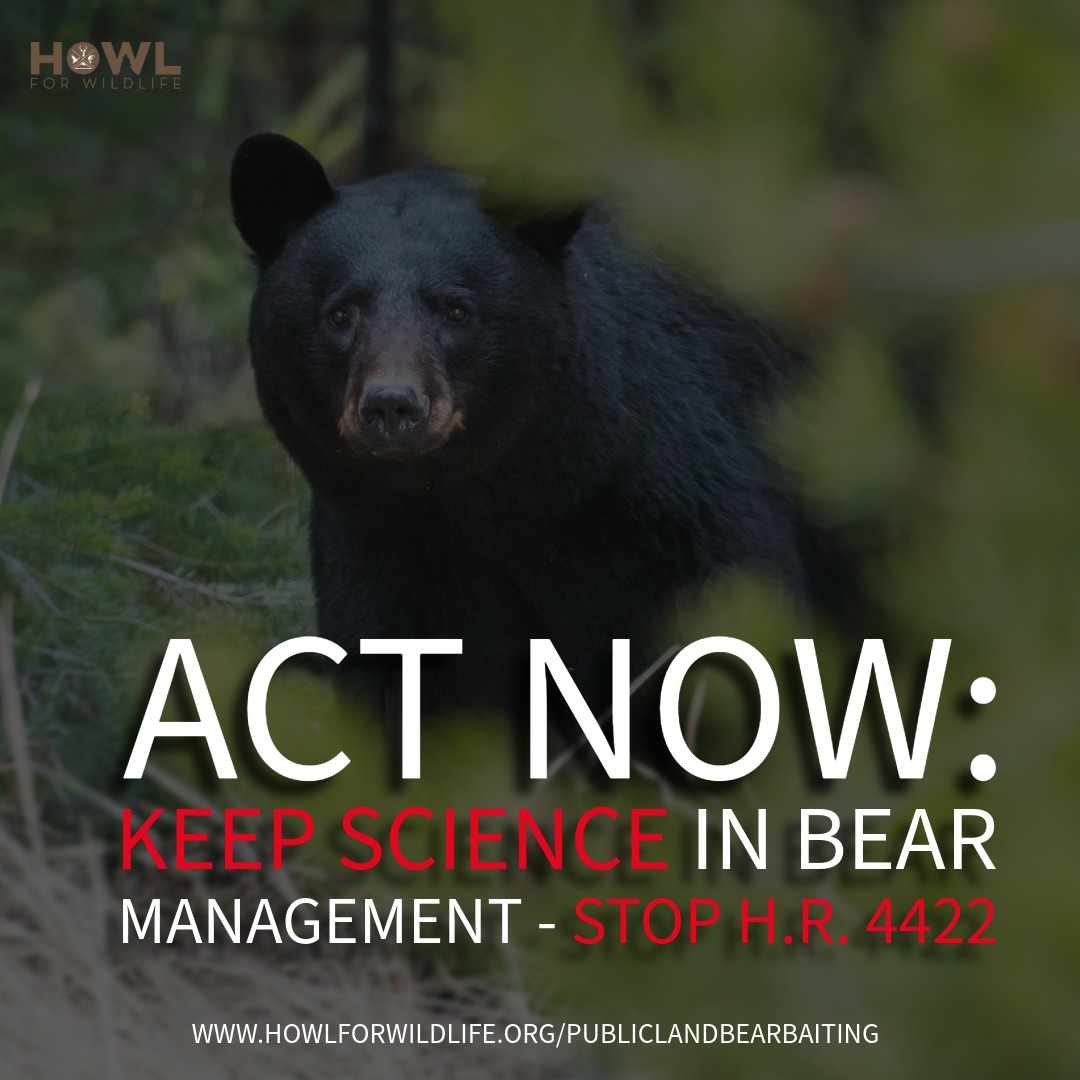
H.R. 4422 (“Don’t Feed the Bears Act”) in a Nutshell
The bill would force every federal land-managing agency to ban “the intentional feeding of bears … to be hunted, a practice known as bear baiting.” Its findings claim bait stations pile “hundreds of pounds of human-scented foods,” make bears more numerous and bolder around people, and are no different from garbage-can attractants in campgrounds. (Congress.gov)
At first glance the language may sound reasonable to some—after all, nobody wants bears rifling through coolers or tearing down tents—but the bill conflates two very different things:
Campground Garbage & Dumpsters
-
Unplanned, high-traffic locations – often within yards of hundreds of campers.
-
No registration or monitoring – anyone’s trash becomes a bear buffet.
-
Food present most of the year – leftovers, coolers, and dumpsters are available long after vacation season.
-
Pulls bears toward people – conditioning them to associate human spaces with calories.
Regulated Bear-Bait Sites
-
Deliberately placed far from people – most states require at least a ¼-mile buffer from roads, trails, homes, and campgrounds.
-
Strictly permitted and inspected – hunters must register sites; many states cap sites per hunter and mandate baiting clinics.
-
Short, seasonal window – bait can be set only during the regulated hunt and must be removed afterward; violations bring stiff penalties.
-
Draws bears away from communities – “diversionary” baiting outside Tahoe neighborhoods, for example, cut conflicts by 93% in just three months.
1. Baiting Is Often the Ethical Tool Of Choice in Dense Forests
In the cedar-spruce thickets of the Pacific Northwest or Alaska’s alder tangles, glassing is impossible, and spot-and-stalk shots are typically under 40 yards. Picture the coastal-plain pinelands stretching from eastern North Carolina down through Georgia: mile after mile of loblolly and longleaf pines stacked so tightly that daylight is reduced to thin green shafts. Beneath that canopy lies an almost impenetrable understory of gallberry, palmetto, titi, and knee-high sweet pepperbush, all latticed by black-water creeks and cypress knees that turn every quiet step into a splash or crack. Visibility here is measured in feet, not yards; a bear can appear and vanish like smoke after two silent strides. In these swampy thickets—much like Maine’s spruce-fir “North Woods,” but warm, wet, and crawling with vines—glassing ridgelines or conducting a classic spot-and-stalk simply isn’t an option. Carefully placed bait stations, registered with state wildlife agencies and set well away from roads or campgrounds, are the only practical way to observe bears long enough to judge sex, age, and physical condition and to take an ethical shot when seconds finally stretch into minutes. That selectivity is why states such as Idaho now require every bear hunter (bait or not) to pass a bear-identification test to prevent mistaken harvest of grizzlies or nursing sows. (Idaho Fish and Game)
2. Precision Harvest Helps State Biologists Meet Management Goals
-
Sex & age targeting. Because hunters can study an animal up close, baiting skews harvest toward mature males—exactly the cohort managers aim to remove while protecting productive females.
-
Population objectives. Where baiting has been banned (e.g., Oregon’s 1994 Measure 18), bear numbers rebounded 40 % even as human-bear complaints rose (Press Herald). States that still allow baiting on federal lands—Alaska, Idaho, Wyoming, Michigan, Minnesota, Utah, Wisconsin—consistently hit quota without resorting to emergency “nuisance” removals. (GOHUNT)
3. Healthy Bears Mean Healthier Deer, Elk, and Even Cougars
Black bears are formidable scavengers. Camera and GPS studies show they usurp 48–77% of mountain lion kills in California and Colorado, forcing cougars to kill more deer to meet energy needs. Maintaining bear numbers at ecological carrying capacity—not well above it—protects ungulate herds and reduces this kleptoparasitism feedback loop.
4. Banning Baiting Could Increase, Not Decrease, Conflicts
When food sources fail, strategically placed bait can pull bears out of neighborhoods. Stringham & Bryant (2015) documented a 41% drop in conflicts within one month—and 93% within three—when baits were placed just outside Tahoe communities. (DigitalCommons@USU) Removing that tool strips managers of a proven, non-lethal conflict-mitigation option.
5. Let Wildlife Professionals, Not Politics, Drive Policy
H.R. 4422 rests on the assumption that federal agencies “inconsistently” message the public. (Congress.gov) The real inconsistency is overriding state biologists who already tailor baiting rules to local habitat, bear density, and public-safety data. Congress rightly prohibits baiting for migratory birds because those populations cross many jurisdictions. Black bears, by contrast, are managed at the state level with population estimates, age-structure modeling, mandatory check stations, tooth submission, and DNA data—exactly the science-based framework the North American Model calls for.
Bottom Line
Bear baiting isn’t a picnic pile of doughnuts beside a crowded campground. It’s a tightly regulated method that:
-
Enhances hunter selectivity—protecting sows with cubs.
-
Helps wildlife agencies meet harvest quotas in otherwise unhuntable terrain.
-
Reduces human-bear encounters when used as diversionary bait.
-
Supports broader ecosystem balance by moderating bear densities.
H.R. 4422 would sideline these benefits and replace adaptive management with a one-size-fits-all political ban. Science, not slogans, should steer North America’s most successful wildlife-conservation system.